
About Big Bill Broonzy
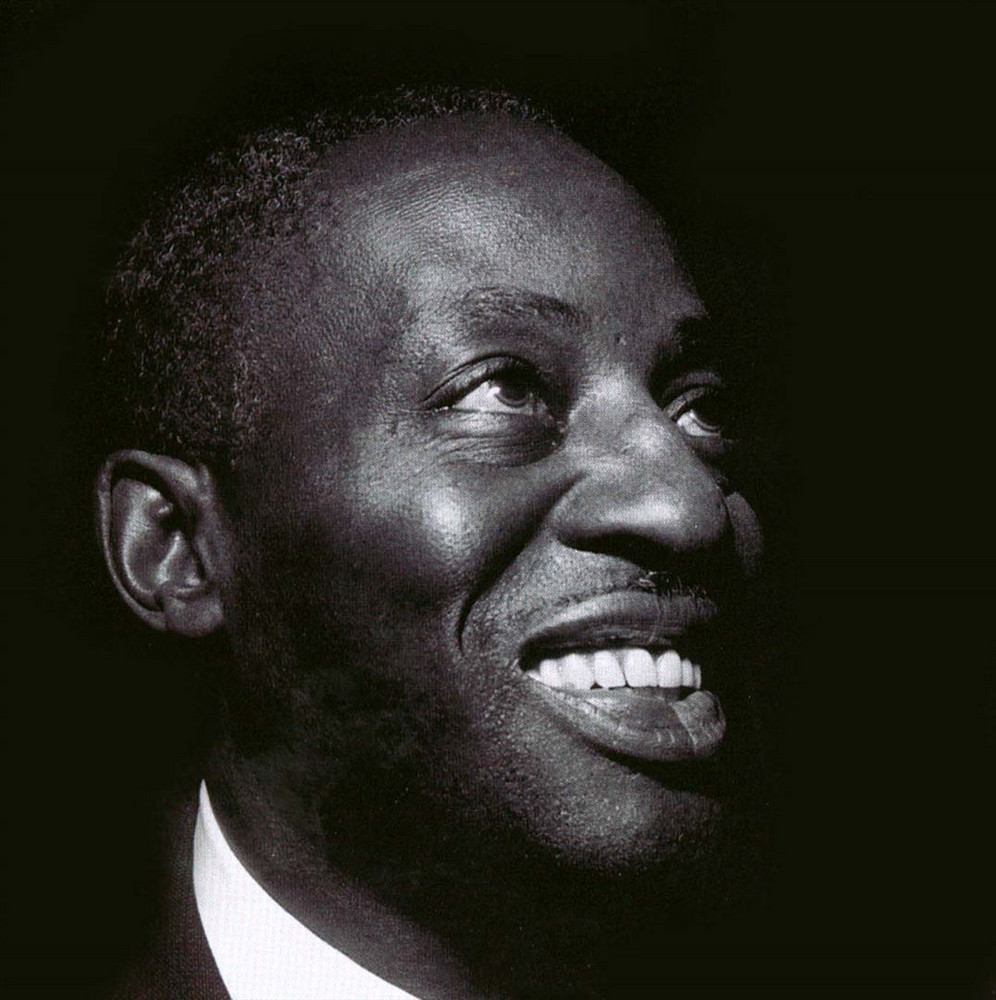
Big Bill Broonzy was born William Lee Conley Broonzy in the tiny town of Scott, Mississippi, just across the river from Arkansas. During his childhood, Broonzy's family -- itinerant sharecroppers and the descendants of ex-slaves -- moved to Pine Bluff to work the fields there. Broonzy learned to play a cigar box fiddle from his uncle, and as a teenager, he played violin in local churches, at community dances, and in a country string band. During World War I, Broonzy enlisted in the U.S. Army, and in 1920, he moved to Chicago and worked in the factories for several years. In 1924, he met Papa Charlie Jackson, a New Orleans native and pioneer blues recording artist for Paramount. Jackson took Broonzy under his wing, taught him guitar, and used him as an accompanist. Broonzy's entire first session at Paramount in 1926 was rejected, but he returned in November 1927 and succeeded in getting his first record, House Rent Stomp, onto Paramount wax. As one of his early records came out with the garbled moniker of Big Bill Broomsley, he decided to shorten his recording name to Big Bill, and this served as his handle on records until after the second World War. Among aliases used for Big Bill on his early releases were Big Bill Johnson, Sammy Sampson, and Slim Hunter. In 1930, the Hokum Boys broke up, and Georgia Tom Dorsey decided to keep the act going by bringing in Big Bill and guitarist Frank Brasswell to replace Tampa Red, billing themselves as "the Famous Hokum Boys." With Georgia Tom and Brasswell, Broonzy hit his stride and penned his first great blues original, "I Can't Be Satisfied." This was a hit and helped make his name with record companies. Although only half-a-dozen blues artists made any records during 1932, the worst year in the 20th century for the record business, one of them was Big Bill, who made 20 issued sides that year. Through Georgia Tom and Tampa Red, Big Bill met Memphis Minnie and toured as her second guitarist in the early '30s, but apparently did not record with her. When he did resume recording in March 1934, it was for Bluebird's newly established Chicago studio under the direction of Lester Melrose. Melrose liked Broonzy's style, and before long, Big Bill would begin working as Melrose's unofficial second-in-command, auditioning artists, matching numbers to performers, booking sessions, and providing backup support to other musicians. He played on literally hundreds of records for Bluebird in the late '30s and into the '40s, including those made by his half-brother, Washboard Sam, Peter Chatman (aka Memphis Slim), John Lee "Sonny Boy" Williamson, and others. With Melrose, Broonzy helped develop the "Bluebird beat," connoting a type of popular blues record that incorporated trap drums and upright string bass. This was the precursor of the "Maxwell Street sound" or "postwar Chicago blues," and helped to redefine the music in a format that would prove popular in the cities. Ironically, while Broonzy was doing all this work for Melrose at Bluebird, his own recordings as singer were primarily made for ARC, and later Columbia's subsidiary Okeh. This was his greatest period, and during this time Broonzy wrote and recorded such songs as "Key to the Highway," "W.P.A. Blues," "All by Myself," and "Unemployment Stomp." For other artists, Broonzy wrote songs such as "Diggin' My Potatoes." All told, Big Bill Broonzy had a hand in creating more than 100 original songs. When promoter John Hammond sought a traditional blues singer to perform at one of his Spirituals to Swing concerts held at Carnegie Hall in New York City, he was looking for Robert Johnson to foot the bill. Hammond learned that Johnson had recently died, and as a result, Big Bill got the nod to appear at Carnegie Hall on February 5, 1939. This appearance was very well received, and earned Broonzy a role in George Seldes' 1939 film Swingin' the Dream alongside Louis Armstrong and Benny Goodman. In the early '40s, Big Bill appeared at the Café Society, the Village Vanguard, and the Apollo Theater, in addition to touring with Lil Greenwood, all of which kept Big Bill busy during the AFM recording ban. By the mid- to late '40s, the operation in Chicago with Melrose had finally begun to wind down, just as electric blues started to heat up. Big Bill continued to record for labels ranging from majors Columbia and Mercury to fly-by-nights such as Hub and RPM. In 1949, Broonzy decided to take some time off from music and got a job working as a janitor at the Iowa State University of Science & Technology in Ames. In 1951, Broonzy was sought out by DJ and writer Studs Terkel and appeared in the latter's concert series I Come for to Sing. Suddenly, Broonzy started to get a lot of press attention, and by September of that year, he was in Paris recording for French Vogue. On this occasion, Broonzy was finally able to wax his tune "Black, Brown and White," a song about race relations that had been in his book for years, but every record company he had ever sung it for had turned it down. In Europe, Broonzy proved incredibly popular, more so than at any time in the United States. Two separate documentary films were made on his life, in France and Belgium, respectively, and from 1951 until ill health finally put him out of the running in the fall of 1957, Broonzy nearly doubled his own 1927-1949 output in terms of new recordings. Broonzy updated his act by adding traditional folk songs to his set, along the lines of what Josh White and Leadbelly had done in then-recent times. While this was met with scrutiny by blues purists, Broonzy was always about popularizing blues, and he was the main pioneer in the entrepreneurial spirit as it applied to the field. His songwriting, producing, and work as a go-between with Lester Melrose is exactly the sort of thing that Willie Dixon would do with Chess in the '50s. This was the part of his career that Broonzy himself valued most highly, and his latter-day fame and popularity were a just reward for a life spent working on behalf of his given discipline and fellow musicians. It would be a short reward, though; just about the time the autobiography he had written with Yannick Bruynoghe, Big Bill Blues, appeared in 1955, he learned he had throat cancer. Big Bill Broonzy died at age 65 in August, 1958, and left a recorded legacy which at the time, in sheer size and depth, well exceeded that of any blues artist born on his side of the year 1900.
Socials
Discography
Lonesome Road Blues
Album1974